
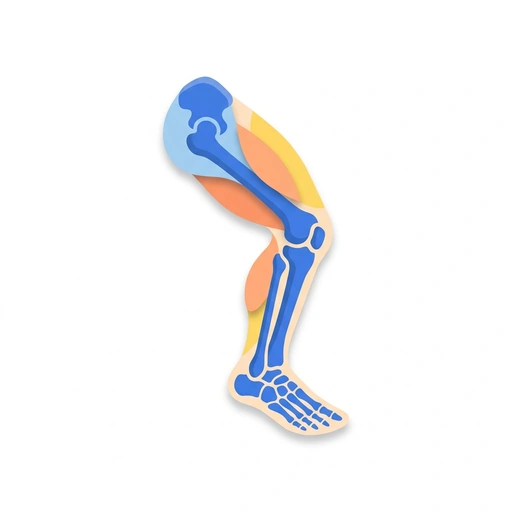
Anatomy for Athletic Movement
Bridge the gap between textbook anatomy and high-performance sport. Learn the functional terminology of planes, muscular roles, connective tissue mechanics, and kinetic chains to talk and train like a sports clinician.
Like Duolingo, but for Anatomy for Athletic Movement. Tomo turns the whole topic into a game you play five minutes a day, until it actually sticks.
A short one: 12 levels across 2 sections, about 24 minutes end to end, roughly 5 days at five minutes a day. It moves through Mapping Body Mechanics and Structural Load and Joint Synergy. It assumes you already know the basics.
Free forever · No credit card · iPhone & Android
Key ideas in Anatomy for Athletic Movement
- Anatomical reference terms remain constant regardless of whether a body is standing or inverted.
- Proximal and distal define positions along a limb relative to its trunk attachment point.
- Spatial descriptors like 'up' fail because limb orientation changes during dynamic movement.
- Squatting is primarily a sagittal plane movement requiring flexion and extension.
- Knee valgus collapse introduces unmanaged transverse and frontal plane forces.
- Non-contact ligament tears often happen when rotational torque twists a hinge joint under load.
- Flexion is defined strictly as decreasing the anterior or posterior angle between articulating bones.
- Moving the thigh backward past anatomical neutral opens the joint angle into hip extension.
- Knee flexion bends the joint backward, demonstrating that 'forward' does not define flexion.
- Gluteal recruitment creates external femoral rotation, preventing dynamic valgus at the knee.
- External rotation of the glenohumeral joint 'packs' the shoulder socket during overhead presses.
- Internal rotation under heavy axial load encourages joint collapse and impingement.
- Hip flexion occurs whenever the femur and pelvis draw closer, regardless of gravity.
- Global orientation (hanging inverted vs. standing) does not change local articular actions.
- Decoupling local kinematics from room coordinates prevents misidentifying muscle actions.
- Eccentric actions resist lengthening under load and produce the highest muscular force
You've tried the other tabs
Thirty open tabs. Four facts you actually kept.
You watched. You nodded. By Sunday it was gone.
One answer, then back to scrolling.
Eight weeks. You meant to finish. You didn't.
Tomo gives Anatomy for Athletic Movement the Duolingo treatment: levels, streaks, and quick quizzes that test what you just learned. That game loop is what the tabs above never had, so it's the one you actually finish.
Here's what playing it feels like
A real question from this course. Take your best guess.
How do anatomists describe where your wrist sits in relation to your elbow?
Get it right to open this lesson and 11 more in the app.
How to learn Anatomy for Athletic Movement, step by step
Go in order. 12 short levels across 2 sections, about 24 minutes in all, five minutes a day.
- 1
Mapping Body Mechanics
- Navigating Movement Planes and Axes
- Muscular Roles in the Kinetic Engine
- 2
Structural Load and Joint Synergy
- Connective Tissue Dynamics and Injury Terminology
- The Joint-by-Joint Matrix and Chain Mechanics
2 sections · 4 units · 12 levels. Built to play, not to enroll.
Questions about Anatomy for Athletic Movement
How do I learn Anatomy for Athletic Movement?
Go in order: start with Mapping Body Mechanics, then Structural Load and Joint Synergy. On Tomo that's 12 short levels, about 24 minutes in all, played five minutes a day. Start free and play the first level in under a minute.
Is there a Duolingo-style app for Anatomy for Athletic Movement?
Yes. Tomo works like Duolingo: short daily lessons, streaks and quick quizzes. Anatomy for Athletic Movement is one of its free courses, and you can type any other topic to get a course of your own.
Is the Anatomy for Athletic Movement course free?
Yes. Anatomy for Athletic Movement is playable on Tomo's free plan, which doesn't expire. No credit card, no waitlist. Download the app and start your first lesson.
How long does it take to learn Anatomy for Athletic Movement?
12 levels across 2 sections, about 24 minutes of play in total. It's built for five minutes a day, so you finish it a little at a time instead of all at once.
Do I need any background to start Anatomy for Athletic Movement?
No. It's pitched at an intermediate level, so it starts where you are and builds up. If you can tap a phone, you can start.
Tomo is in ChatGPT
Tomo is also a ChatGPT plugin: the same playable courses, built and played inside your chat.
Add Tomo to ChatGPT- What to ask
- “Make me a Tomo course on black holes.” “Turn this chat into a Tomo course.”
- What you get
- Quick questions with instant feedback, hearts and stars, ready to play in about a minute.
- Where it goes
- No sign-up to start. Connect your Tomo account and your streak carries on in the app.
You pick the voice
Anatomy for Athletic Movement is taught in the Bestie style: your friend who just gets it. Want a different feel? In the app you can spin up the same topic in any of Tomo's teaching styles. Same facts, totally different vibe.
More Sports on Tomo
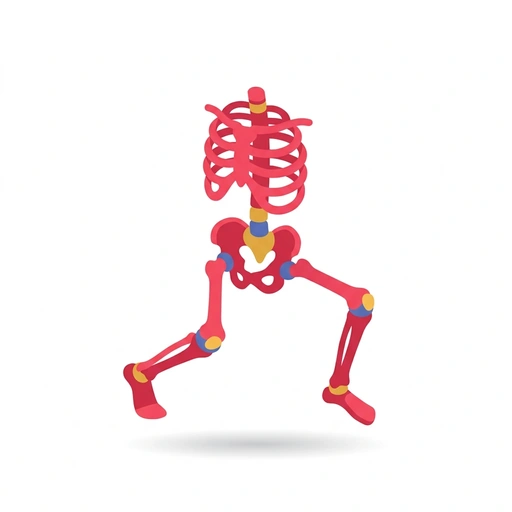
Functional Anatomy in Sport
Decode the biomechanical language used by athletic trainers, physical therapists, and sports medicine pros. Learn how joints, planes, and kinetic chains work under real athletic loads.
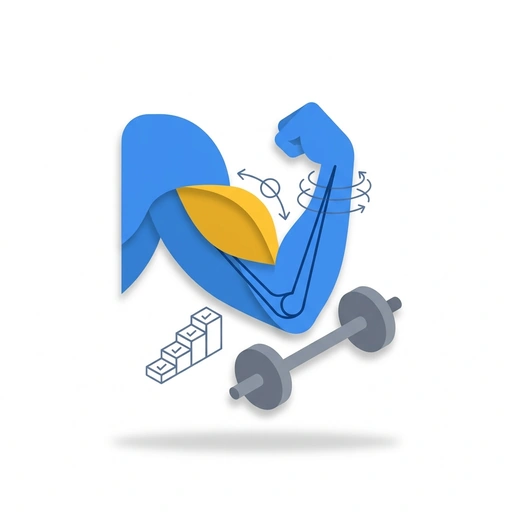
Hypertrophy Biomechanics and Program Design
Bridge the gap between exercise physiology and gym execution. Learn how to optimize joint stability, manipulate resistance profiles to match muscle anatomy, and program training volume for maximum muscular hypertrophy.
Lower Body Mechanics
Upgrade your squats, hinges, and lunges by understanding joint angles, pelvic control, and ground contact. Eliminate lower back strain and knee pain by fixing the subtle power leaks in your stance.
Whole-Body EMS with Miha Bodytec
Bridge clinical neuromuscular physiology and advanced WB-EMS programming. Learn precise current parameter manipulation, motor unit recruitment mechanics, and rigorous safety protocols for high-intensity training.
Training for Your Fastest Mile
Aiming for extreme speed starts with respecting physiological reality. Learn to benchmark your current fitness, master track intervals, tune running form, and build durable speed safely.

High-Elo Valorant Consistency
Bridge the gap between streaky pop-off games and repeatable Immortal-plus performance. Refine your dynamic crosshair geometry, master target confirmation, and build bulletproof cognitive habits under pressure.
Start Anatomy for Athletic Movement today.
Download Tomo, search Anatomy for Athletic Movement, and play your first lesson in under a minute.