
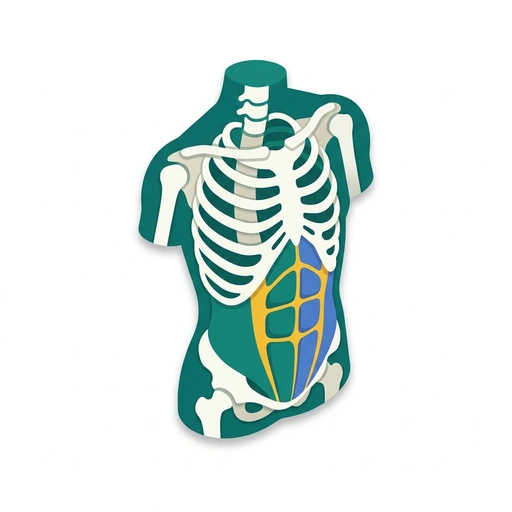
Anatomy for Pilates
Understand the muscles, joints, and mechanics behind every Pilates movement. Learn how your core, spine, and breath work together to build balanced strength and prevent strain.
Like Duolingo, but for Anatomy for Pilates. Tomo turns the whole topic into a game you play five minutes a day, until it actually sticks.
21 levels across 3 sections, about 42 minutes end to end, roughly 8 days at five minutes a day. It moves through Finding Your Center, Mobilizing the Spine, and Limb Anchors and Breath Mechanics. It starts from scratch.
Free forever · No credit card · iPhone & Android
Key ideas in Anatomy for Pilates
- The powerhouse is a four-sided 3D cylinder rather than flat surface abs
- The roof is the breathing diaphragm and the floor is the pelvic floor
- Deep back muscles (multifidus) and the deep abdominal corset enclose the sides and rear
- Transverse abdominis fibers wrap horizontally around the abdomen like a wide belt
- Contracting horizontal fibers pulls the abdominal wall inward toward the spine
- Vertical abs flex the spine forward instead of drawing the belly in
- The pelvic floor acts as a supportive muscular hammock at the base of the torso
- Proper pelvic floor engagement is an upward drawing sensation, lifting internal organs
- Bearing downward creates harmful intra-abdominal pressure instead of core support
- Deep core stabilizers must fire first to lock the lumbar spine and pelvis in neutral
- Limb movers (hip flexors and leg muscles) initiate movement only after the base is anchored
- Moving limbs without prior central stabilization strains the lower back
- A true scoop draws the navel in toward the spine and lifts slightly toward the ribcage
- Puffing the belly outward or doming along the midline means the surface six-pack is bulging without deep stabilization
- Bearing down forces intra-abdominal pressure downward against the pelvic floor instead of scooping
- The spine rests directly on top of the sacrum and pelvis
You've tried the other tabs
Thirty open tabs. Four facts you actually kept.
You watched. You nodded. By Sunday it was gone.
One answer, then back to scrolling.
Eight weeks. You meant to finish. You didn't.
Tomo gives Anatomy for Pilates the Duolingo treatment: levels, streaks, and quick quizzes that test what you just learned. That game loop is what the tabs above never had, so it's the one you actually finish.
Here's what playing it feels like
A real question from this course. Take your best guess.
If your powerhouse is a cylinder, what forms its roof and floor?
Get it right to open this lesson and 20 more in the app.
How to learn Anatomy for Pilates, step by step
Go in order. 21 short levels across 3 sections, about 42 minutes in all, five minutes a day.
- 1
Finding Your Center
- The Pilates Powerhouse
- Pelvic Alignment and Neutral Spine
- 2
Mobilizing the Spine
- Spine Articulation: Rolling Bone by Bone
- Twisting and Side-Bending with Control
- 3
Limb Anchors and Breath Mechanics
- The Shoulder Girdle and Scapular Stability
- Hip Sockets and Pelvic Stability
- The Diaphragm and Lateral Breathing
3 sections · 7 units · 21 levels. Built to play, not to enroll.
Questions about Anatomy for Pilates
How do I learn Anatomy for Pilates?
Go in order: start with Finding Your Center, then Mobilizing the Spine, then Limb Anchors and Breath Mechanics. On Tomo that's 21 short levels, about 42 minutes in all, played five minutes a day. Start free and play the first level in under a minute.
Is there a Duolingo-style app for Anatomy for Pilates?
Yes. Tomo works like Duolingo: short daily lessons, streaks and quick quizzes. Anatomy for Pilates is one of its free courses, and you can type any other topic to get a course of your own.
Is the Anatomy for Pilates course free?
Yes. Anatomy for Pilates is playable on Tomo's free plan, which doesn't expire. No credit card, no waitlist. Download the app and start your first lesson.
How long does it take to learn Anatomy for Pilates?
21 levels across 3 sections, about 42 minutes of play in total. It's built for five minutes a day, so you finish it a little at a time instead of all at once.
Do I need any background to start Anatomy for Pilates?
No. It's pitched at a beginner level, so it starts where you are and builds up. If you can tap a phone, you can start.
Tomo is in ChatGPT
Tomo is also a ChatGPT plugin: the same playable courses, built and played inside your chat.
Add Tomo to ChatGPT- What to ask
- “Make me a Tomo course on black holes.” “Turn this chat into a Tomo course.”
- What you get
- Quick questions with instant feedback, hearts and stars, ready to play in about a minute.
- Where it goes
- No sign-up to start. Connect your Tomo account and your streak carries on in the app.
You pick the voice
Anatomy for Pilates is taught in the Professor style: clear, structured, thorough. Want a different feel? In the app you can spin up the same topic in any of Tomo's teaching styles. Same facts, totally different vibe.
More Health on Tomo
Pilates Anatomy: Movement from Within
Discover how your muscles and bones work together to create the strength, length, and control that define the Pilates method.
Pilates Anatomy in Action
Understand the real muscles and mechanics behind classic Pilates cues. Learn how your core, spine, and breath interact so every mat exercise feels lighter, safer, and far more effective.
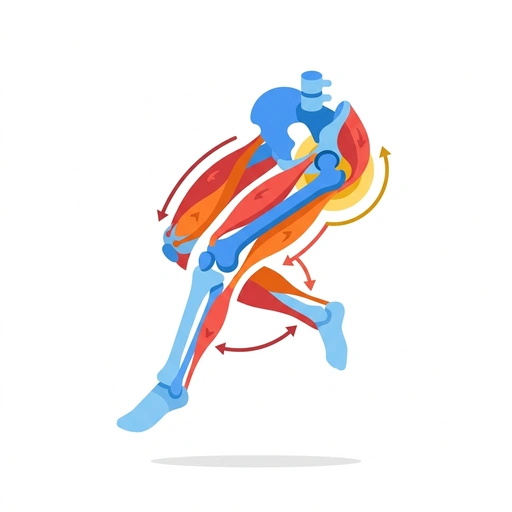
Anatomy for Pilates Professionals
Bridge the gap between textbook anatomy and the moving body. Master the musculoskeletal relationships that drive core stability, spinal articulation, and efficient movement patterns in your clients.
Anatomy for Pilates Movement
Understand the functional anatomy behind classic Pilates exercises and cues. Learn how the deep core, spine, and joint stabilizers work together to guide safe, effective movement.
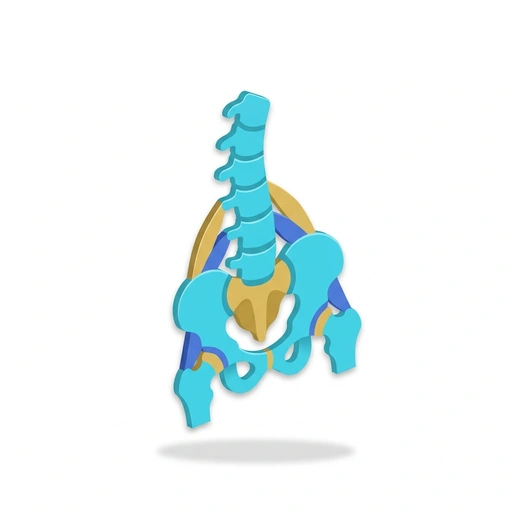
Pilates Anatomy: The Body in Motion
Understand how your muscles and bones work together to create the strength and control that defines Pilates. Learn to move from your center and protect your spine with every breath.
Mat Pilates: Movement and Anatomy
Discover the anatomical logic and precise movements of classical mat Pilates. Learn how to activate your powerhouse, articulate your spine, and build lasting core stability from the floor up.
Start Anatomy for Pilates today.
Download Tomo, search Anatomy for Pilates, and play your first lesson in under a minute.