
Clinical and Surgical Anatomy
Move beyond static textbook diagrams into dynamic, three-dimensional relational anatomy. Master fascial spread compartments, surgical dissection planes, neurovascular entrapments, and the developmental origins of anatomical variation.
Like Duolingo, but for Clinical and Surgical Anatomy. Tomo turns the whole topic into a game you play five minutes a day, until it actually sticks.
22 levels across 3 sections, about 44 minutes end to end, roughly 9 days at five minutes a day. It moves through Navigating Three-Dimensional Spaces, High-Stakes Relational Systems, and Structural Origins and Kinetic Networks.
Free forever · No credit card · iPhone & Android
Key ideas in Clinical and Surgical Anatomy
- The danger space lies between the alar fascia anteriorly and the prevertebral layer of deep cervical fascia posteriorly
- Unlike the true retropharyngeal space which terminates at the level of T1-T2, the danger space extends without barrier down to the diaphragm
- Descending fluid tracking through the danger space terminates specifically in the posterior mediastinum
- The anterior and posterior layers of renal fascia (Gerota and Zuckerkandl) fuse firmly superiorly, laterally, and medially across the great vessels
- Inferiorly, the layers remain loosely apposed or open over the ureter, allowing retroperitoneal fluid, pus, or hematomas to track directly downward toward the pelvis and iliac fossa
- Midline crossing is structurally impeded by tight medial fusion to the vascular adventitia and dense connective tissue around the aorta and IVC
- Below the arcuate line, all three aponeuroses (external oblique, internal oblique, and transversus abdominis) pass anterior to the rectus abdominis muscle
- The posterior rectus sheath is absent inferior to the arcuate line, leaving only the transversalis fascia and parietal peritoneum between the rectus abdominis and the preperitoneal space
- The inferior epigastric vessels enter the rectus abdominis by piercing the transversalis fascia at the arcuate line, making them vulnerable to shear and hematoma formation unconstrained by a posterior aponeurosis
- Colles' fascia fuses posteriorly with the free edge of the perineal membrane and perineal body, blocking urine from entering the ischioanal fossa
- Colles' fascia is continuous anteriorly with dartos fascia and Scarpa's fascia, allowing fluid to climb onto the anterior abdominal wall deep to the membranous layer
- Scarpa's fascia anchors tightly to the fascia lata just inferior to the inguinal ligament along the tension line of Holden, stopping fluid from tracking down the thigh
- Baker's cysts arise from enlargement of the gastrocnemio-semimembranosus bursa through a slit-like capsular opening
- The neck of the cyst is anatomically constrained between the medial head of the gastrocnemius muscle and the semimembranosus tendon
- The bursa acts as a one-way ball-valve mechanism: knee extension compresses the bursa and pushes fluid out of the joint, preventing spontaneous return into the main articular space
- The subclavian vein runs anterior to the anterior scalene, sparing it from compression within the interscalene triangle
You've tried the other tabs
Thirty open tabs. Four facts you actually kept.
You watched. You nodded. By Sunday it was gone.
One answer, then back to scrolling.
Eight weeks. You meant to finish. You didn't.
Tomo gives Clinical and Surgical Anatomy the Duolingo treatment: levels, streaks, and quick quizzes that test what you just learned. That game loop is what the tabs above never had, so it's the one you actually finish.
Here's what playing it feels like
A real question from this course. Take your best guess.
Ahoy! Which two fascial layers bind the infamous cervical 'danger space'?
Get it right to open this lesson and 21 more in the app.
How to learn Clinical and Surgical Anatomy, step by step
Go in order. 22 short levels across 3 sections, about 44 minutes in all, five minutes a day.
- 1
Navigating Three-Dimensional Spaces
- Tracing Fluid and Infection Along Deep Fascial Planes
- Diagnosing Neurovascular Entrapment Bottlenecks
- 2
High-Stakes Relational Systems
- Preserving Autonomics in Pelvic and Perineal Dissection
- Navigating the Retroperitoneum and Mesenteric Fusion Planes
- Skull Base Crossroads: Pterygopalatine and Cavernous Spaces
- 3
Structural Origins and Kinetic Networks
- Embryological Drivers of Vascular and Organ Topography
- Fascial Tensegrity and Kinetic Chains
3 sections · 7 units · 22 levels. Built to play, not to enroll.
Questions about Clinical and Surgical Anatomy
How do I learn Clinical and Surgical Anatomy?
Go in order: start with Navigating Three-Dimensional Spaces, then High-Stakes Relational Systems, then Structural Origins and Kinetic Networks. On Tomo that's 22 short levels, about 44 minutes in all, played five minutes a day. Start free and play the first level in under a minute.
Is there a Duolingo-style app for Clinical and Surgical Anatomy?
Yes. Tomo works like Duolingo: short daily lessons, streaks and quick quizzes. Clinical and Surgical Anatomy is one of its free courses, and you can type any other topic to get a course of your own.
Is the Clinical and Surgical Anatomy course free?
Yes. Clinical and Surgical Anatomy is playable on Tomo's free plan, which doesn't expire. No credit card, no waitlist. Download the app and start your first lesson.
How long does it take to learn Clinical and Surgical Anatomy?
22 levels across 3 sections, about 44 minutes of play in total. It's built for five minutes a day, so you finish it a little at a time instead of all at once.
Do I need any background to start Clinical and Surgical Anatomy?
No. It's pitched at an advanced level, so it starts where you are and builds up. If you can tap a phone, you can start.
Tomo is in ChatGPT
Tomo is also a ChatGPT plugin: the same playable courses, built and played inside your chat.
Add Tomo to ChatGPT- What to ask
- “Make me a Tomo course on black holes.” “Turn this chat into a Tomo course.”
- What you get
- Quick questions with instant feedback, hearts and stars, ready to play in about a minute.
- Where it goes
- No sign-up to start. Connect your Tomo account and your streak carries on in the app.
You pick the voice
Clinical and Surgical Anatomy is taught in the Pirate style: arr, learning be an adventure!. Want a different feel? In the app you can spin up the same topic in any of Tomo's teaching styles. Same facts, totally different vibe.
More Health on Tomo
Applied Surgical Anatomy
Bridge the gap between static textbook diagrams and dynamic surgical dissection. Learn to read living tissue planes, steer by fixed landmarks, and protect vulnerable neurovascular structures.
Surgical Orthopedic Anatomy
Examine high-yield surgical intervals, capsuloligamentous joint restraints, and vulnerable vascular corridors essential for orthopedic procedures. Master the structural mechanics and anatomical danger zones encountered in operative practice.
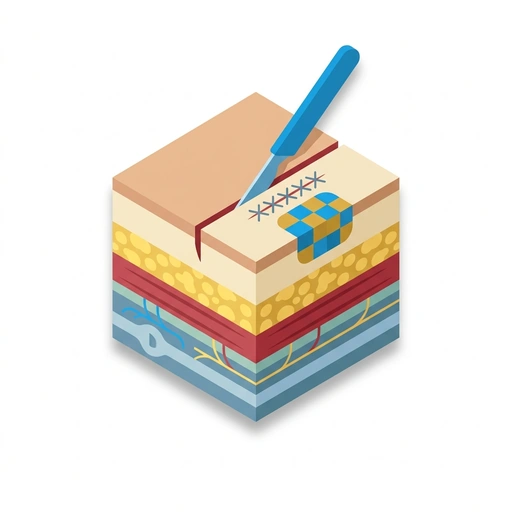
Surgical Anatomy and Tissue Reconstruction
Examine the structural planes, vascular territories, and tissue mechanics behind plastic and reconstructive surgery. Learn to identify critical anatomical landmarks and evaluate complex reconstructive procedures with precision.
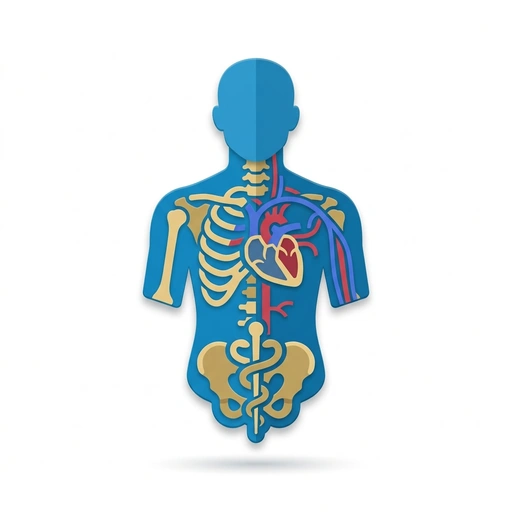
Clinical Anatomy and Physiology
Bridge foundational human biology and medical practice. Connect gross anatomical architecture and systemic physiology directly to bedside physical diagnosis and clinical signs.
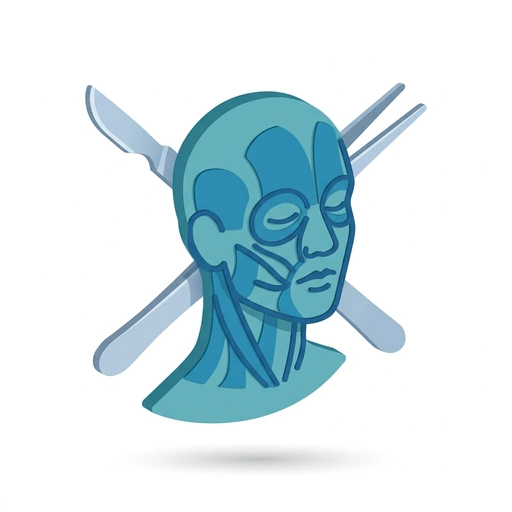
Visual Anatomy for Plastic Surgery
Learn to interpret surgical photos, cross-sections, and anatomical diagrams like a surgeon. Recognize tissue planes, critical fascial layers, and vital danger zones across the face, abdomen, and breast.
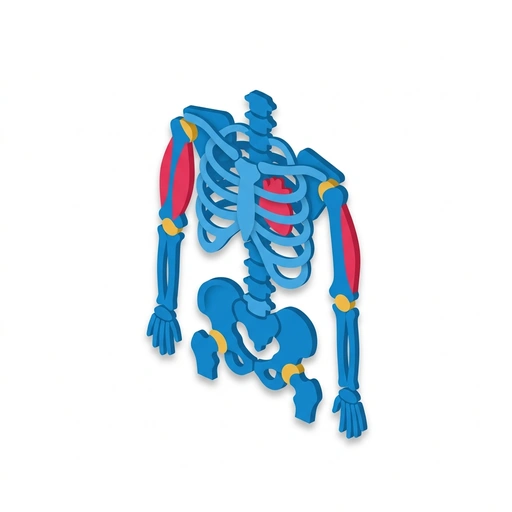
Human Anatomy for Nursing
Learn to read the human body through the eyes of a bedside clinician. Connect structural landmarks, vital organ positions, and anatomical pathways directly to daily patient assessment.
Start Clinical and Surgical Anatomy today.
Download Tomo, search Clinical and Surgical Anatomy, and play your first lesson in under a minute.