
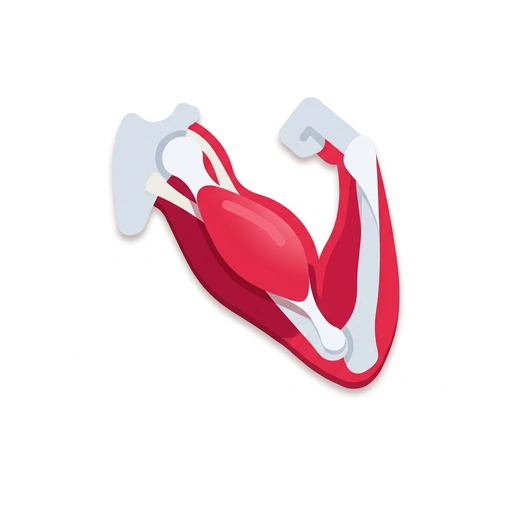
Decoding Human Muscle Names
Stop memorizing muscle names as arbitrary Latin jargon. Discover the simple visual code of shapes, sizes, and attachment points that makes anatomical names instantly make sense.
Like Duolingo, but for Decoding Human Muscle Names. Tomo turns the whole topic into a game you play five minutes a day, until it actually sticks.
A short one: 12 levels across 2 sections, about 24 minutes end to end, roughly 5 days at five minutes a day. It moves through Cracking the Naming Code and Mapping the Trunk and Limbs. It starts from scratch.
Free forever · No credit card · iPhone & Android
Key ideas in Decoding Human Muscle Names
- Muscle names are functional descriptions of what they do, where they sit, or what bones they connect to
- Breaking a muscle name into parts reveals its action (flexor) and location/anchors (wrist, radius bone)
- Size labels exist in contrasting pairs to distinguish neighboring muscles in the same region
- Maximus/minimus refers to total bulk or volume (like gluteus maximus)
- Major/minor usually distinguishes larger and smaller flat surface areas (like pectoralis major)
- Deltoid is named after the triangular Greek letter delta
- Early anatomists used simple geometric silhouettes (triangles, trapezoids) to label major muscle contours
- The prefix tri- means three and -ceps stems from the word for head
- Biceps has two heads, triceps has three, and quadriceps has four distinct upper tendons anchoring to bone
- Rectus means straight or parallel to the body's midline
- Transverse means running horizontally across from side to side
- Oblique means running at an angle or diagonal
- Pectoralis major is the broad, superficial fan across the front of the chest that powers pushing movements
- Pectoralis minor lies deeper and hidden underneath pectoralis major
- Pectus is the root meaning chest or breast
- Latissimus dorsi spans a massive triangular sheet across the lower and mid-back
You've tried the other tabs
Thirty open tabs. Four facts you actually kept.
You watched. You nodded. By Sunday it was gone.
One answer, then back to scrolling.
Eight weeks. You meant to finish. You didn't.
Tomo gives Decoding Human Muscle Names the Duolingo treatment: levels, streaks, and quick quizzes that test what you just learned. That game loop is what the tabs above never had, so it's the one you actually finish.
Here's what playing it feels like
A real question from this course. Take your best guess.
When you see a muscle named 'flexor carpi radialis,' what happens if you break the name into parts?
Get it right to open this lesson and 11 more in the app.
Where Decoding Human Muscle Names takes you
- 1
Cracking the Naming Code
- The Muscle Decoder Ring
- Upper Body Movers
- 2
Mapping the Trunk and Limbs
- The Core and Lower Body Pillars
- Compound Names and Action Clues
2 sections · 4 units · 12 levels. Built to play, not to enroll.
Tomo is in ChatGPT
Tomo is also a ChatGPT plugin: the same playable courses, built and played inside your chat.
Add Tomo to ChatGPT- What to ask
- “Make me a Tomo course on black holes.” “Turn this chat into a Tomo course.”
- What you get
- Quick questions with instant feedback, hearts and stars, ready to play in about a minute.
- Where it goes
- No sign-up to start. Connect your Tomo account and your streak carries on in the app.
You pick the voice
Decoding Human Muscle Names is taught in the Bestie style: your friend who just gets it. Want a different feel? In the app you can spin up the same topic in any of Tomo's teaching styles. Same facts, totally different vibe.
More Science on Tomo
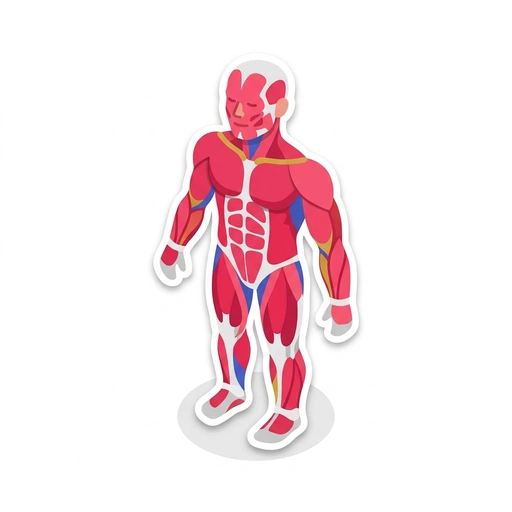
Human Muscle Anatomy
Discover how facial expressions, posture, and athletic movements actually work from the inside out. Learn the major muscle groups of the human body and the physiological mechanics behind every motion.
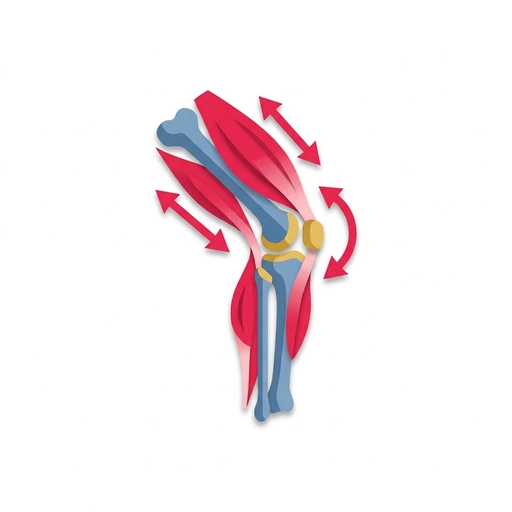
Musculoskeletal Biomechanics
Examine how the human body turns tissue into mechanical power. Learn how bones, joints, and muscles operate as living lever systems, generate force across variable joint angles, and physically adapt to mechanical load.
The Architecture of the Human Body
Understand how the human body really fits together, from bony landmarks and force-transmitting joints to visceral compartments and neurovascular routes.
How the Human Body Fits Together
Understand your body's structural architecture through the bones, muscles, and organs you live with every day. Map where parts actually sit and see how your internal systems coordinate every breath and step.
Human Anatomy: The Working Body
Explore how the human body is engineered from surface landmarks to internal organ systems. Learn the functional architecture behind every movement, heartbeat, and nerve reflex using clear, practical mental models. Build a lasting spatial understanding of how your bones, muscles, and organs fit and work together.
How Living Things Work
See the hidden rules that keep organisms alive, from self-regulating cells to evolving ecosystems. Learn how life balances, reproduces, adapts, and connects across the planet.
Start Decoding Human Muscle Names today.
Download Tomo, search Decoding Human Muscle Names, and play your first lesson in under a minute.