
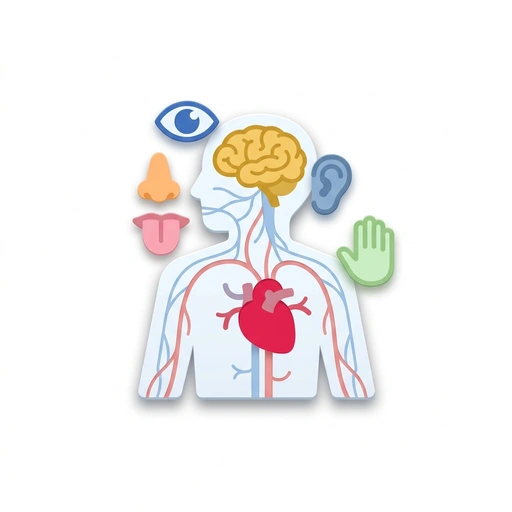
How the Human Body Works
Discover how your senses, muscles, brain, and heart collaborate as an extraordinary living machine. Learn how your body translates the world outside into thought, movement, and life on the inside.
Like Duolingo, but for How the Human Body Works. Tomo turns the whole topic into a game you play five minutes a day, until it actually sticks.
A short one: 12 levels across 2 sections, about 24 minutes end to end, roughly 5 days at five minutes a day. It moves through Sensing and Moving in the World and The Master Control and Engine. It starts from scratch.
Free forever · No credit card · iPhone & Android
Key ideas in How the Human Body Works
- Each sense organ relies on dedicated receptor cells built for one specific kind of physical input
- Sensory organs convert physical energy like light or movement into electrical impulses the brain can read
- The tongue detects basic tastes like sweet, salty, and sour, but complex flavor comes largely from airborne scent molecules reaching the nose
- Chewing releases aromas that travel up the back of the throat into the nasal cavity to combine with taste signals
- The skin contains separate, dedicated sensors for temperature changes, mechanical pressure, rapid vibration, and pain signals
- A light breeze and a burn trigger entirely different receptor types in the skin
- Sensory adaptation causes receptors to decrease their signaling when exposed to a continuous, unchanging input
- The brain prioritizes detecting new changes in the environment rather than tracking steady background states
- Having two ears allows the brain to compare the fraction-of-a-second timing difference and volume difference between both sides
- Paired organs work together so the nervous system can compute location, depth, or direction by cross-referencing two viewpoints
- Bones like the ribs and skull act as protective shields around vital organs like the heart and brain
- Joints are the meeting points of bones that dictate how and where limbs can bend or twist
- Different joint shapes permit different directions of movement, such as bending like a door hinge versus rotating around
- Muscles can only pull by tightening up, they cannot actively push bones away
- To undo a movement like bending an elbow, a partner muscle on the opposite side must pull
- The biceps pulls to bend the arm while the triceps pulls to straighten it back out
You've tried the other tabs
Thirty open tabs. Four facts you actually kept.
You watched. You nodded. By Sunday it was gone.
One answer, then back to scrolling.
Eight weeks. You meant to finish. You didn't.
Tomo gives How the Human Body Works the Duolingo treatment: levels, streaks, and quick quizzes that test what you just learned. That game loop is what the tabs above never had, so it's the one you actually finish.
Here's what playing it feels like
A real question from this course. Take your best guess.
What do your sense organs do with physical energy like light or sound waves before your brain can understand it?
Get it right to open this lesson and 11 more in the app.
Where How the Human Body Works takes you
- 1
Sensing and Moving in the World
- Tuning Into Your Five Senses
- How Bones and Muscles Create Motion
- 2
The Master Control and Engine
- The Brain: Your Master Controller
- The Heart: The Tireless Pump
2 sections · 4 units · 12 levels. Built to play, not to enroll.
Tomo is in ChatGPT
Tomo is also a ChatGPT plugin: the same playable courses, built and played inside your chat.
Add Tomo to ChatGPT- What to ask
- “Make me a Tomo course on black holes.” “Turn this chat into a Tomo course.”
- What you get
- Quick questions with instant feedback, hearts and stars, ready to play in about a minute.
- Where it goes
- No sign-up to start. Connect your Tomo account and your streak carries on in the app.
You pick the voice
How the Human Body Works is taught in the Bestie style: your friend who just gets it. Want a different feel? In the app you can spin up the same topic in any of Tomo's teaching styles. Same facts, totally different vibe.
More Science on Tomo
How the Human Body Works
Discover the mechanical and chemical principles that keep your body alive and moving. Learn how organs coordinate behind the scenes, how muscles generate force, and how your system automatically balances itself.
How the Human Body Works
Discover how your body functions as an interconnected living machine. Explore the mechanics of bones and muscles, the heart and lungs' oxygen highway, digestive fuel conversion, and the nervous system's command center.
Your Body's Blueprint
Discover the incredible engineering of the human body, from the electrical signals in your brain to the living architecture of your bones.
Human Anatomy: The Working Body
Explore how the human body is engineered from surface landmarks to internal organ systems. Learn the functional architecture behind every movement, heartbeat, and nerve reflex using clear, practical mental models. Build a lasting spatial understanding of how your bones, muscles, and organs fit and work together.
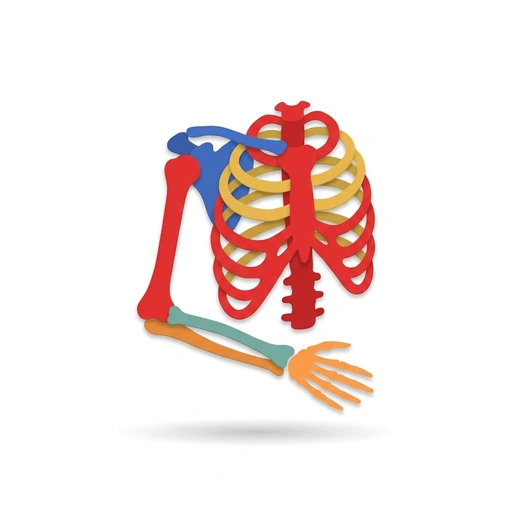
How the Human Body Is Built
Discover the physical architecture that keeps you moving, breathing, and alive. From the mechanical levers of your skeleton to the internal plumbing of your organs, learn to read the map of your own body with clarity and confidence.
How Minds Measure Reality
Discover the hidden math and physics running your senses. Learn why your nervous system measures physical energy in ratios, how to filter signal from noise, and why perception is an exercise in probability.
Start How the Human Body Works today.
Download Tomo, search How the Human Body Works, and play your first lesson in under a minute.