
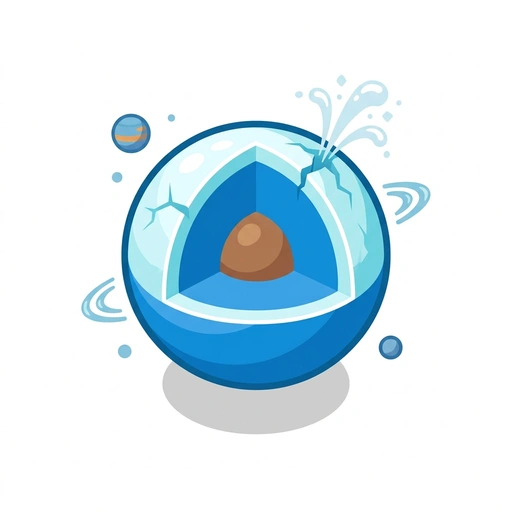
Ocean Worlds of the Solar System
Like Duolingo, but for Ocean Worlds of the Solar System. Tomo turns the whole topic into a game you play five minutes a day, until it actually sticks.
For the part of you with thirty open tabs that never became anything.
70 levels across 8 sections, about 140 minutes end to end, roughly 28 days at five minutes a day. It moves through Beyond Earth's Shores, Detecting the Unseen, The Recipe for Life, Europa: Jupiter’s Icy Mystery, Enceladus: The Tiger Stripes, Titan: The Weird One, The Distant Cousins, and The Search for Life. It starts from scratch.
Free forever · No credit card · iPhone & Android
Key ideas in Ocean Worlds of the Solar System
- The traditional Goldilocks Zone only accounts for surface water warmed by starlight
- Moons in the cold outer solar system can host liquid oceans beneath ice shells
- Thick ice shells act as insulation for the water below
- Internal heat prevents the entire ocean from freezing solid
- The expansion of the habitable zone beyond orbital distance
- How internal heat maintains liquid oceans in deep space
- Tidal forces from a massive planet generate friction inside a moon
- Friction from gravitational tugging creates enough heat to melt ice
- Water transports nutrients and chemicals within a biological system
- Chemical reactions for life happen more easily in a liquid medium than in ice or gas
- The role of gravity in generating heat for ocean worlds
- Conditions for subsurface oceans are much easier to meet than Earth-like surface conditions
- Icy moons with internal heat are likely more numerous than planets in the narrow Goldilocks Zone
- Why liquid water is the primary target in the search for life
- The prevalence of ocean worlds compared to Earth-like planets
- Ice at cryogenic temperatures behaves like rigid rock
You've tried the other tabs
Thirty open tabs. Four facts you actually kept.
You watched. You nodded. By Sunday it was gone.
One answer, then back to scrolling.
Eight weeks. You meant to finish. You didn't.
Tomo gives Ocean Worlds of the Solar System the Duolingo treatment: levels, streaks, and quick quizzes that test what you just learned. That game loop is what the tabs above never had, so it's the one you actually finish.
Here's what playing it feels like
A real question from this course. Take your best guess.
Where can we find liquid water in the freezing, dark parts of our solar system?
Get it right to open this lesson and 69 more in the app.
Where Ocean Worlds of the Solar System takes you
Journey beyond Earth to discover the hidden, liquid-water oceans locked beneath the icy shells of moons and dwarf planets. Explore the chemistry, gravity, and extreme environments that make these distant worlds the best places to search for alien life.
- 1
Beyond Earth's Shores
- Redefining the Habitable Zone
- The Architecture of a Hidden Sea
- 2
Detecting the Unseen
- Gravity and the Art of the Wobble
- Magnetic Echoes in the Deep
- Catching a Plume
- 3
The Recipe for Life
- Tidal Heating: The Gravity Furnace
- Hydrothermal Vents and Rock-Water Chemistry
- 4
Europa: Jupiter’s Icy Mystery
- The Chaos Terrain
- The Radiation Gauntlet
- 5
Enceladus: The Tiger Stripes
- The South Pole Sprays
- Tasting Organics in Space
- 6
Titan: The Weird One
- Lakes of Natural Gas
- The Deep Water Layer
- 7
The Distant Cousins
- Ganymede and Callisto
- Triton and the Dwarf Planets
- 8
The Search for Life
- Biosignatures and Detection
- Planetary Protection
- Future Explorers: Subs and Sails
8 sections · 18 units · 70 levels. Built to play, not to enroll.
You pick the voice
Ocean Worlds of the Solar System is taught in the Explain Like I'm 5 style: no big words. promise.. Want a different feel? In the app you can spin up the same topic in any of Tomo's teaching styles. Same facts, totally different vibe.
More Science on Tomo
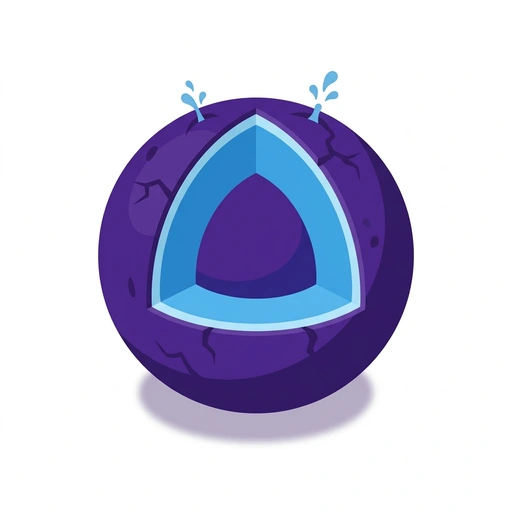
Ocean Worlds: Life on Saturn's Moons
Explore the icy frontiers of Enceladus and Titan to uncover the chemical secrets of subsurface oceans and the potential for extraterrestrial life.
Exoplanets and the Search for Life
An exhaustive exploration of planetary systems beyond our own, from the subsurface oceans of icy moons to the detection of biosignatures in the deep cosmos.

Navigating the Solar System
Move beyond basic planet names to understand the orbital mechanics, solar weather, and gravitational dances that define our cosmic neighborhood.
The Cosmos and Beyond
Go beyond the basics of the solar system to master the mechanics of orbital motion, stellar evolution, and the deep-space structures that define our universe.

The Search for Extraterrestrial Life
Move beyond science fiction to explore the rigorous science of astrobiology, from detecting chemical fingerprints in distant atmospheres to the protocols of first contact.

Earth’s Cosmic Engine
Discover how our planet functions as a single, interconnected machine. From the deep ocean currents to the solar winds that shape our atmosphere, learn to read the signs of Earth's complex systems.
Start Ocean Worlds of the Solar System today.
Download Tomo, search Ocean Worlds of the Solar System, and play your first lesson in under a minute.