
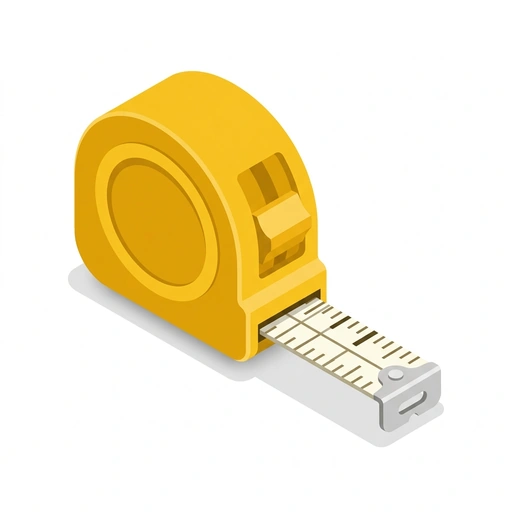
Reading the Tape for Construction
Read standard construction tapes instantly without counting tick marks one by one. Learn pro techniques for hook mechanics, inside corners, stud layouts, and squaring assemblies on the jobsite.
Like Duolingo, but for Reading the Tape for Construction. Tomo turns the whole topic into a game you play five minutes a day, until it actually sticks.
21 levels across 3 sections, about 42 minutes end to end, roughly 8 days at five minutes a day. It moves through Reading the Blade at Speed; True Numbers and Physical Technique; and Layouts, Cuts, and Squaring. It starts from scratch.
Free forever · No credit card · iPhone & Android

Key ideas in Reading the Tape for Construction
- Tape measure marks step down in height as the fraction gets smaller
- The half-inch line is the tallest mark between whole-inch numbers
- The shortest tick marks on a standard tape represent sixteenths
- Major landmarks like 1/4", 1/2", and 3/4" divide the inch into recognizable sections
- Jumping straight to the 1/2" mark and reading forward by one tick (5/8") saves counting every tiny mark
- Counting from zero on every measurement slows down work and increases errors
- Every even sixteenth mark shares a line with a taller fraction (e.g., 2/16" is 1/8", 4/16" is 1/4")
- Only odd-numbered counts (1/16, 3/16, 5/16) use the shortest tick marks on the blade
- Line height handles fraction reduction automatically without mental math
- Carpenters say 'strong' when a measurement is a hair over a mark and 'light' when it is a hair under
- Jobsite callouts combine reduced fractions with strong/light to keep communication fast and clear
- Inventing smaller fractions like thirty-seconds causes confusion on standard construction sites
- The nearest solid whole-inch number acts as the closest reference point for marks near the top of the inch
- Reading backward from the next full inch is faster than counting forward across three-quarters of the inch
- One sixteenth less than 48 inches is immediately read as 47 and 15/16 inches
- Continuous running inches count upward consecutively (1, 2... 67, 68) along the blade
You've tried the other tabs
Thirty open tabs. Four facts you actually kept.
You watched. You nodded. By Sunday it was gone.
One answer, then back to scrolling.
Eight weeks. You meant to finish. You didn't.
Tomo gives Reading the Tape for Construction the Duolingo treatment: levels, streaks, and quick quizzes that test what you just learned. That game loop is what the tabs above never had, so it's the one you actually finish.
Here's what playing it feels like
A real question from this course. Take your best guess.
What is the tallest mark you will see between two whole-inch numbers?
Get it right to open this lesson and 20 more in the app.
How to learn Reading the Tape for Construction, step by step
Go in order. 21 short levels across 3 sections, about 42 minutes in all, five minutes a day.
- 1
Reading the Blade at Speed
- Reading Fractions Without Counting Ticks
- Jobsite Markings and Stud Centers
- 2
True Numbers and Physical Technique
- Hook Mechanics and Blade Accuracy
- Inside Corners and Long Blade Spans
- 3
Layouts, Cuts, and Squaring
- Marking Cuts and Saw Kerf
- On-Center Spacing and Equal Divisions
- Squaring Assemblies with Tape Pulls
3 sections · 7 units · 21 levels. Built to play, not to enroll.
Questions about Reading the Tape for Construction
How do I learn Reading the Tape for Construction?
Go in order: start with Reading the Blade at Speed, then True Numbers and Physical Technique, then Layouts, Cuts, and Squaring. On Tomo that's 21 short levels, about 42 minutes in all, played five minutes a day. Start free and play the first level in under a minute.
Is there a Duolingo-style app for Reading the Tape for Construction?
Yes. Tomo works like Duolingo: short daily lessons, streaks and quick quizzes. Reading the Tape for Construction is one of its free courses, and you can type any other topic to get a course of your own.
Is the Reading the Tape for Construction course free?
Yes. Reading the Tape for Construction is playable on Tomo's free plan, which doesn't expire. No credit card, no waitlist. Download the app and start your first lesson.
How long does it take to learn Reading the Tape for Construction?
21 levels across 3 sections, about 42 minutes of play in total. It's built for five minutes a day, so you finish it a little at a time instead of all at once.
Do I need any background to start Reading the Tape for Construction?
No. It's pitched at a beginner level, so it starts where you are and builds up. If you can tap a phone, you can start.
Tomo is in ChatGPT
Tomo is also a ChatGPT plugin: the same playable courses, built and played inside your chat.
Add Tomo to ChatGPT- What to ask
- “Make me a Tomo course on black holes.” “Turn this chat into a Tomo course.”
- What you get
- Quick questions with instant feedback, hearts and stars, ready to play in about a minute.
- Where it goes
- No sign-up to start. Connect your Tomo account and your streak carries on in the app.
You pick the voice
Reading the Tape for Construction is taught in the Bestie style: your friend who just gets it. Want a different feel? In the app you can spin up the same topic in any of Tomo's teaching styles. Same facts, totally different vibe.
More Technology on Tomo
The Measuring Tape
Unlock the clever mechanical features hidden in plain sight on a standard tape measure. Learn how to decode tick marks instantly, measure inside corners cleanly, and achieve dead-accurate cuts every time.
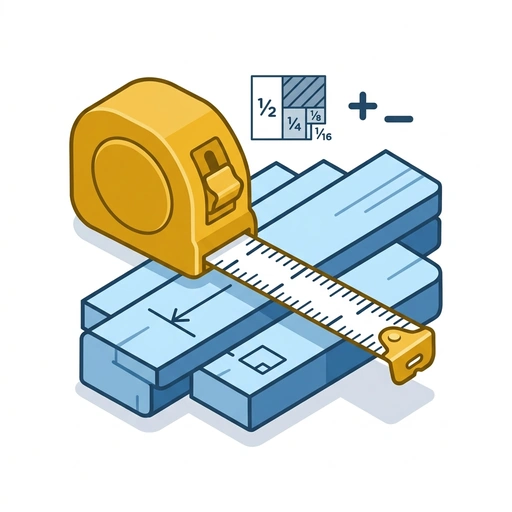
Reading the Tape Measure
Learn to read every tick mark on a tape measure instantly without slow counting. Master sixteenth-inch fractions, mental tape math, real lumber dimensions, and professional framing layouts.
Reading a Tape Measure
Unlock every mark on the tape with total confidence. Learn how to decode fractions at a glance, master the hidden mechanics of the hook, and use framing marks like a seasoned pro.
Tape Measure Technique and Layout
Move beyond rough estimates to achieve shop-grade accuracy and speed with a standard tape measure. Learn the physics of true zero, parallax elimination, blind inside corners, and rapid layout geometry.
Reading a Tape Measure
Unlock the secret language of tick marks, line heights, and hidden tool features. Gain the confidence to measure furniture, rooms, and materials with pin-point accuracy on the first try.
Tape Measure Fluency
Stop counting tiny tick marks and start reading, calling, and laying out dimensions like a seasoned jobsite pro. Learn real trade callouts, hook mechanics, stud markings, and precision layout habits.
Start Reading the Tape for Construction today.
Download Tomo, search Reading the Tape for Construction, and play your first lesson in under a minute.