
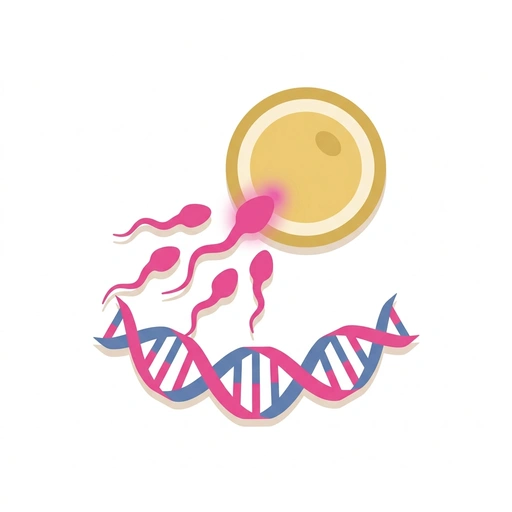
The Architecture of Life: Advanced Reproductive Science
Master the complex biological systems and hormonal feedback loops that drive human reproduction. From the precision of gametogenesis to the intricate signaling of the gestational environment, explore the science of how life begins.
Like Duolingo, but for The Architecture of Life: Advanced Reproductive Science. Tomo turns the whole topic into a game you play five minutes a day, until it actually sticks.
A short one: 30 levels across 3 sections, about 60 minutes end to end, roughly 12 days at five minutes a day. It moves through Optimizing the Biological Engine, The Mechanics of Conception and Intervention, and Gestational Mastery and Molecular Foundations.
Free forever · No credit card · iPhone & Android

Key ideas in The Architecture of Life: Advanced Reproductive Science
- GnRH must be released in pulses to trigger the pituitary gland
- Reproduction is an 'expensive' luxury process that is sacrificed first
- Continuous (non-pulsatile) secretion causes the reproductive system to shut down
- Vital survival functions like cellular repair and temperature control are prioritized over making offspring
- The brain uses pulse frequency to signal that the body is in a state of readiness
- The HPG axis is inhibited when metabolic sensors detect low energy
- Stress hormones like cortisol directly interfere with brain-to-gonad signaling
- How the brain signals a 'safe' vs 'unsafe' environment through GnRH timing
- The hormone leptin acts as a 'fuel gauge' that must be high enough to allow reproduction
- The body's hierarchy of energy allocation during a calorie deficit
- Physical over-exertion can silence the HPG axis via opioid signaling
- Identifying specific stressors that disrupt the HPG conversation
- The dominant follicle develops more FSH receptors than its competitors
- Falling FSH levels starve smaller follicles that are less sensitive to the hormone
- Sustained high estrogen levels trigger a shift from inhibiting to stimulating the brain
- The LH surge is the immediate chemical trigger for the release of the egg
You've tried the other tabs
Thirty open tabs. Four facts you actually kept.
You watched. You nodded. By Sunday it was gone.
One answer, then back to scrolling.
Eight weeks. You meant to finish. You didn't.
Tomo gives The Architecture of Life: Advanced Reproductive Science the Duolingo treatment: levels, streaks, and quick quizzes that test what you just learned. That game loop is what the tabs above never had, so it's the one you actually finish.
Here's what playing it feels like
A real question from this course. Take your best guess.
If the brain wants to activate the reproductive system, how should it release the hormone GnRH?
Get it right to open this lesson and 29 more in the app.
How to learn The Architecture of Life: Advanced Reproductive Science, step by step
Go in order. 30 short levels across 3 sections, about 1 hour in all, five minutes a day.
- 1
Optimizing the Biological Engine
- Hypothalamic-Pituitary-Gonadal (HPG) Axis Dynamics
- Folliculogenesis and the Ovarian Cycle
- Spermatogenesis and the Blood-Testis Barrier
- Endometrial Receptivity and the Implantation Window
- Decoding Cervical Mucus and Basal Body Temperature
- 2
The Mechanics of Conception and Intervention
- Sperm Capacitation and the Acrosome Reaction
- Polyspermy Blocks and Zygotic Activation
- Assisted Reproductive Technologies: IVF and ICSI
- Preimplantation Genetic Testing (PGT) Protocols
- 3
Gestational Mastery and Molecular Foundations
- Trophoblast Invasion and Placentation
- Hormonal Shifts: hCG, Progesterone, and Relaxin
- Fetal Circulatory Shunts and Adaptations
- The Myometrial Transition and Parturition Cascades
- Epigenetic Programming in Utero
- Teratology: Critical Periods of Organogenesis
3 sections · 15 units · 30 levels. Built to play, not to enroll.
Questions about The Architecture of Life: Advanced Reproductive Science
How do I learn The Architecture of Life: Advanced Reproductive Science?
Go in order: start with Optimizing the Biological Engine, then The Mechanics of Conception and Intervention, then Gestational Mastery and Molecular Foundations. On Tomo that's 30 short levels, about 1 hour in all, played five minutes a day. Start free and play the first level in under a minute.
Is there a Duolingo-style app for The Architecture of Life: Advanced Reproductive Science?
Yes. Tomo works like Duolingo: short daily lessons, streaks and quick quizzes. The Architecture of Life: Advanced Reproductive Science is one of its free courses, and you can type any other topic to get a course of your own.
Is The Architecture of Life: Advanced Reproductive Science free?
Yes. The Architecture of Life: Advanced Reproductive Science is playable on Tomo's free plan, which doesn't expire. No credit card, no waitlist. Download the app and start your first lesson.
How long does it take to learn The Architecture of Life: Advanced Reproductive Science?
30 levels across 3 sections, about 1 hour of play in total. It's built for five minutes a day, so you finish it a little at a time instead of all at once.
Do I need any background to start The Architecture of Life: Advanced Reproductive Science?
No. It's pitched at an advanced level, so it starts where you are and builds up. If you can tap a phone, you can start.
Tomo is in ChatGPT
Tomo is also a ChatGPT plugin: the same playable courses, built and played inside your chat.
Add Tomo to ChatGPT- What to ask
- “Make me a Tomo course on black holes.” “Turn this chat into a Tomo course.”
- What you get
- Quick questions with instant feedback, hearts and stars, ready to play in about a minute.
- Where it goes
- No sign-up to start. Connect your Tomo account and your streak carries on in the app.
You pick the voice
The Architecture of Life: Advanced Reproductive Science is taught in the Professor style: clear, structured, thorough. Want a different feel? In the app you can spin up the same topic in any of Tomo's teaching styles. Same facts, totally different vibe.
More Science on Tomo
Musculoskeletal Biomechanics
Examine how the human body turns tissue into mechanical power. Learn how bones, joints, and muscles operate as living lever systems, generate force across variable joint angles, and physically adapt to mechanical load.
How Matter Works: The Foundations of Chemistry
Discover the hidden logic of the physical world, from the dance of subatomic particles to the explosive energy of chemical reactions.
The Biological Control Room
Explore how life manages energy and information to stay in balance. You will learn how your body regulates itself, how cells power their operations, and how DNA acts as the ultimate instruction manual.
How the Human Body Is Built
Discover the physical architecture that keeps you moving, breathing, and alive. From the mechanical levers of your skeleton to the internal plumbing of your organs, learn to read the map of your own body with clarity and confidence.
Astrophysics: The Life of the Cosmos
Move beyond basic stargazing to understand the physical laws governing stars, galaxies, and the fabric of space-time itself. Learn how we measure the unmeasurable and predict the fate of the universe.

MCAT Science and Reasoning
Bridge undergraduate coursework and the MCAT with high-yield conceptual models across biochemistry, physics, chemistry, and behavioral science. Master passage deconstruction, experimental reasoning, and the interdisciplinary links required to score 510+.
Start The Architecture of Life: Advanced Reproductive Science today.
Download Tomo, search The Architecture of Life: Advanced Reproductive Science, and play your first lesson in under a minute.