
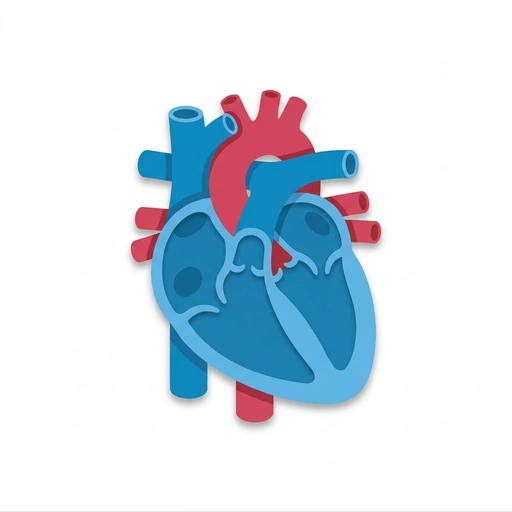
Anatomie : le corps avec précision
Apprenez à nommer et situer avec rigueur chaque structure du corps humain. Maîtrisez le vocabulaire anatomique officiel, des repères palpables aux organes vitaux, sans jargon inutile mais avec une exacte précision.
Like Duolingo, but for Anatomie : le corps avec précision. Tomo turns the whole topic into a game you play five minutes a day, until it actually sticks.
26 levels across 4 sections, about 52 minutes end to end, roughly 10 days at five minutes a day. It moves through S'orienter et repérer la charpente, L'appareil locomoteur en action, L'organisation des cavités internes, and Les autoroutes de transport et de commande. It starts from scratch.
Free forever · No credit card · iPhone & Android
Key ideas in Anatomie : le corps avec précision
- Anatomical reference position always assumes a person standing upright, facing forward, arms at sides with palms forward
- Anatomical descriptions never change based on whether the patient is lying down, sitting, or upside down
- The observer's point of view does not alter the body's standardized orientation
- Sagittal plane cuts vertically into right and left portions
- Frontal (coronal) plane splits the front surface from the back surface
- Transverse (horizontal) plane creates top (superior) and bottom (inferior) cross-sections
- Medial means closer to the central midline of the body; lateral means further out toward the sides
- In the reference position, palms face outward so the thumb points away from the midline (lateral)
- The pinky sits closest to the trunk (medial)
- Proximal means nearer to where the limb joins the trunk
- Distal means further down the limb toward the tip of fingers or toes
- These terms only apply to limbs to describe relative distance along the branch
- Anterior (ventral) refers strictly to the front belly-side of the body
- Posterior (dorsal) refers strictly to the back spine-side
- Kneecap, breastbone, and navel belong to the anterior surface; shoulder blade and spinal column belong to the posterior surface
- Les tissus mous comme les muscles et les artères glissent et changent de forme
You've tried the other tabs
Thirty open tabs. Four facts you actually kept.
You watched. You nodded. By Sunday it was gone.
One answer, then back to scrolling.
Eight weeks. You meant to finish. You didn't.
Tomo gives Anatomie : le corps avec précision the Duolingo treatment: levels, streaks, and quick quizzes that test what you just learned. That game loop is what the tabs above never had, so it's the one you actually finish.
Here's what playing it feels like
A real question from this course. Take your best guess.
Un médecin examine un patient allongé sur le ventre. Comment décrit-il les parties de son corps ?
Get it right to open this lesson and 25 more in the app.
Where Anatomie : le corps avec précision takes you
- 1
S'orienter et repérer la charpente
- Les coordonnées du corps : s'orienter dans l'espace
- Les repères osseux palpables sous les doigts
- 2
L'appareil locomoteur en action
- L'architecture articulaire et les surfaces de glissement
- Les muscles squelettiques et leurs vecteurs de force
- 3
L'organisation des cavités internes
- Le thorax et la mécanique ventilatoire
- L'abdomen et la géographie du péritoine
- 4
Les autoroutes de transport et de commande
- Le système cardiovasculaire et les voies de retour
- Le système nerveux périphérique et les territoires d'innervation
4 sections · 8 units · 26 levels. Built to play, not to enroll.
Tomo is in ChatGPT
Tomo is also a ChatGPT plugin: the same playable courses, built and played inside your chat.
Add Tomo to ChatGPT- What to ask
- “Make me a Tomo course on black holes.” “Turn this chat into a Tomo course.”
- What you get
- Quick questions with instant feedback, hearts and stars, ready to play in about a minute.
- Where it goes
- No sign-up to start. Connect your Tomo account and your streak carries on in the app.
You pick the voice
Anatomie : le corps avec précision is taught in the Professor style: clear, structured, thorough. Want a different feel? In the app you can spin up the same topic in any of Tomo's teaching styles. Same facts, totally different vibe.
More Science on Tomo
Électrostatique pour la FST
Apprivoisez les concepts clés du polycopié de physique S1 : de la force de Coulomb aux lignes de champ, maîtrisez les distributions de charge et le potentiel sans vous noyer dans les intégrales.
Anatomy: Bones, Muscles, and Nerves
Bridge the gap between memorizing isolated terms and understanding the human body as an integrated machine. Master skeletal landmarks, muscle attachment logic, and peripheral nerve pathways.

How the Human Body Works
Discover how your body coordinates movement, fuels your cells, and keeps you alive. Learn the mechanics behind everyday sensations from your heartbeat to muscle fatigue.
How the Human Body Fits Together
Move beyond memorizing isolated bones and organs to understand how your body is engineered. Learn the mechanical tradeoffs, vascular highways, and pressure chambers that keep everything working.
Everyday Physics of Motion
Decode the invisible forces behind how objects move, fall, and collide in daily life. Learn why you lurch forward when a bus stops, how crumple zones save lives, and why everything falls at the same speed.
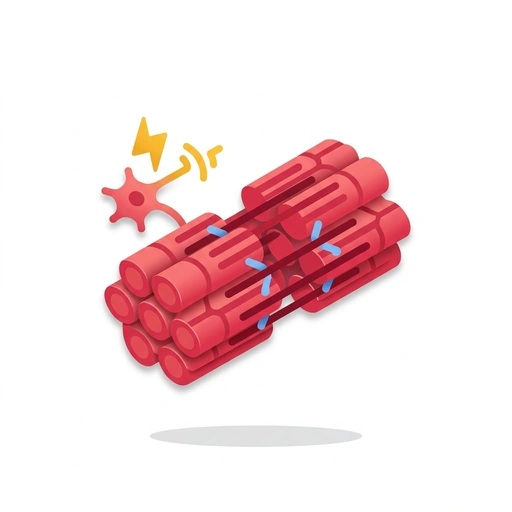
How Muscles Contract
Discover the microscopic machinery that converts nerve impulses into physical force. Learn how molecular ratchets slide, how calcium unlocks movement, and how the body calibrates tension in real time.
Start Anatomie : le corps avec précision today.
Download Tomo, search Anatomie : le corps avec précision, and play your first lesson in under a minute.