
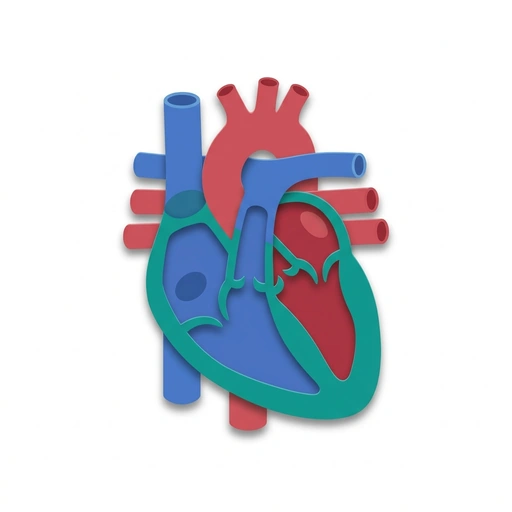
Anatomy and Physiology for Patient Care
Understand how the human body functions as an interconnected system. Learn the core physiological concepts and organ systems that underpin vital signs, fluid balance, and clinical nursing assessments.
Like Duolingo, but for Anatomy and Physiology for Patient Care. Tomo turns the whole topic into a game you play five minutes a day, until it actually sticks.
27 levels across 3 sections, about 54 minutes end to end, roughly 11 days at five minutes a day. It moves through The Living Body in Motion; Fluids, Filtration, and Digestion; and Control, Defense, and Communication. It starts from scratch.
Free forever · No credit card · iPhone & Android
Key ideas in Anatomy and Physiology for Patient Care
- Anatomical directions always refer to the patient's own left and right, not the viewer's
- The standard anatomical position assumes the patient is standing upright, facing forward, with palms forward
- Receptors detect a change away from normal
- A control center compares the signal against a set point and decides action
- Effectors carry out the physical change that counteracts the initial disturbance
- Vital signs are immediate measurable outputs of underlying regulating systems
- Each vital sign reflects whether a specific vital loop (circulation, gas exchange, heat balance) is staying in range
- Positive feedback amplifies a stimulus rather than reversing it
- Positive feedback drives toward a definitive end point like childbirth or sealing a clot, then turns off
- Symptoms like fever or shivering are deliberate energy expenditures by the body to fight illness or restore balance
- A fever creates an inhospitable environment for pathogens and speeds up immune cell activity
- The delicate capillary vessels in the lungs would rupture under high pressure
- The left ventricle must generate high pressure to force blood through the entire body
- Keeping the two circuits separate lets the heart use different pressures for each
- Heart sounds are produced by the sudden closure of heart valves vibrating surrounding tissues
- Valves snap shut automatically when blood pushes back against them under shifting pressure
You've tried the other tabs
Thirty open tabs. Four facts you actually kept.
You watched. You nodded. By Sunday it was gone.
One answer, then back to scrolling.
Eight weeks. You meant to finish. You didn't.
Tomo gives Anatomy and Physiology for Patient Care the Duolingo treatment: levels, streaks, and quick quizzes that test what you just learned. That game loop is what the tabs above never had, so it's the one you actually finish.
Here's what playing it feels like
A real question from this course. Take your best guess.
In the standard anatomical position, how are the palms held?
Get it right to open this lesson and 26 more in the app.
How to learn Anatomy and Physiology for Patient Care, step by step
Go in order. 27 short levels across 3 sections, about 54 minutes in all, five minutes a day.
- 1
The Living Body in Motion
- Reading the Living Body
- Circulation and Oxygen Delivery
- The Mechanics of Breathing
- 2
Fluids, Filtration, and Digestion
- Fluids, Electrolytes, and Kidney Filtration
- Fueling, Digestion, and Metabolism
- 3
Control, Defense, and Communication
- Rapid Control via the Nervous System
- Chemical Coordination: Hormones and Endocrine Feedback
- Defense, Skin, and Immune Surveillance
3 sections · 8 units · 27 levels. Built to play, not to enroll.
Questions about Anatomy and Physiology for Patient Care
How do I learn Anatomy and Physiology for Patient Care?
Go in order: start with The Living Body in Motion, then Fluids, Filtration, and Digestion, then Control, Defense, and Communication. On Tomo that's 27 short levels, about 54 minutes in all, played five minutes a day. Start free and play the first level in under a minute.
Is there a Duolingo-style app for Anatomy and Physiology for Patient Care?
Yes. Tomo works like Duolingo: short daily lessons, streaks and quick quizzes. Anatomy and Physiology for Patient Care is one of its free courses, and you can type any other topic to get a course of your own.
Is the Anatomy and Physiology for Patient Care course free?
Yes. Anatomy and Physiology for Patient Care is playable on Tomo's free plan, which doesn't expire. No credit card, no waitlist. Download the app and start your first lesson.
How long does it take to learn Anatomy and Physiology for Patient Care?
27 levels across 3 sections, about 54 minutes of play in total. It's built for five minutes a day, so you finish it a little at a time instead of all at once.
Do I need any background to start Anatomy and Physiology for Patient Care?
No. It's pitched at a beginner level, so it starts where you are and builds up. If you can tap a phone, you can start.
Tomo is in ChatGPT
Tomo is also a ChatGPT plugin: the same playable courses, built and played inside your chat.
Add Tomo to ChatGPT- What to ask
- “Make me a Tomo course on black holes.” “Turn this chat into a Tomo course.”
- What you get
- Quick questions with instant feedback, hearts and stars, ready to play in about a minute.
- Where it goes
- No sign-up to start. Connect your Tomo account and your streak carries on in the app.
You pick the voice
Anatomy and Physiology for Patient Care is taught in the Bestie style: your friend who just gets it. Want a different feel? In the app you can spin up the same topic in any of Tomo's teaching styles. Same facts, totally different vibe.
More Health on Tomo
Anatomy and Physiology for Nursing
Build a working understanding of the human body and how its organ systems cooperate to keep us alive. Tailored for nursing entrance exams like the TEAS and HESI, this course covers high-yield anatomy, physiological feedback loops, and cellular mechanisms.
How Your Body Fits Together
Discover the brilliant engineering beneath your skin. Learn how your bones, muscles, organs, and nerves connect and collaborate to keep you moving, breathing, and alive.
Human Anatomy for Patient Care
Learn the essential structures and functional systems of the human body through a practical clinical lens. Understand how organs interact, where vital landmarks sit, and why anatomical knowledge forms the foundation of frontline healthcare.
Human Anatomy Foundations
Build the structural vocabulary and physiological concepts you need before walking into your first anatomy and physiology lab. Decode directional terms, master tissue architecture, and map major regulatory systems.
How the Human Body Works
Discover the physical architecture and living systems that keep you alive, moving, and sensing every day. Trace how muscles generate mechanical force, how the heart and lungs power your cells, and how organs coordinate behind the scenes.
Human Movement and Vitality
Explore the intricate machinery of the human body, from the physics of a perfect squat to the cellular chemistry of the food you eat.
Start Anatomy and Physiology for Patient Care today.
Download Tomo, search Anatomy and Physiology for Patient Care, and play your first lesson in under a minute.