
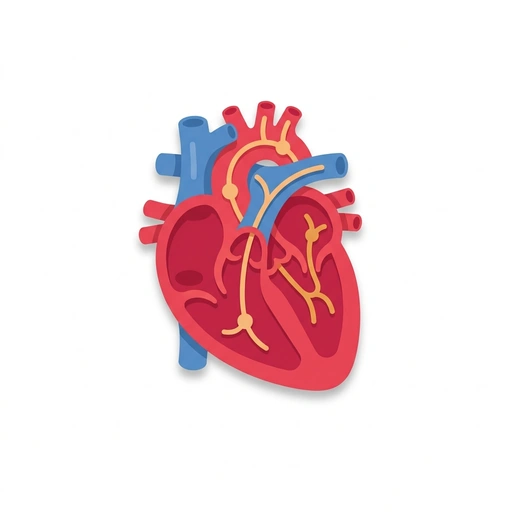
How the Human Body Works
Discover the physical architecture and living systems that keep you alive, moving, and sensing every day. Trace how muscles generate mechanical force, how the heart and lungs power your cells, and how organs coordinate behind the scenes.
Like Duolingo, but for How the Human Body Works. Tomo turns the whole topic into a game you play five minutes a day, until it actually sticks.
25 levels across 4 sections, about 50 minutes end to end, roughly 10 days at five minutes a day. It moves through The Mechanical Frame; The Fuel and Transport Engine; Signaling and Coordination; and Filtration, Defense, and Repair. It starts from scratch.
Free forever · No credit card · iPhone & Android
Key ideas in How the Human Body Works
- Bones are living tissue that constantly rebuild and reshape based on physical strain
- Weight-bearing activities trigger bones to add mass, while weightlessness or bed rest leads to bone loss
- Ball-and-socket joints (like the shoulder and hip) allow rotation in almost every direction
- Hinge joints (like the elbow and knee) move back and forth in one single direction for stability
- Slippery cartilage caps the ends of bones to absorb impact and create a smooth surface
- Synovial fluid lubricates the joint capsule so cartilage glides without friction
- Tendons tie muscles directly to bones so muscle contraction pulls the skeleton
- Ligaments strap bones directly to other bones to stop joints from twisting the wrong way
- Cartilage cushions bone ends inside the joint
- Most human limb joints act as third-class levers where muscles attach close to the fulcrum (joint)
- This lever setup sacrifices mechanical advantage, meaning muscles must pull hard to lift relatively light loads
- The major benefit of this arrangement is speed and distance: a short muscle contraction moves the far end of the limb a long way very fast
- Skeletal muscle fibers only produce force by shortening and pulling; they can never actively push
- Joints rely on antagonistic muscle pairs situated on opposite sides to reverse movements
- When the bicep flexes the elbow, the tricep contracts to pull the joint straight again
- Muscle fibers contain microscopic protein filaments (actin and myosin) arranged in repeating segments
You've tried the other tabs
Thirty open tabs. Four facts you actually kept.
You watched. You nodded. By Sunday it was gone.
One answer, then back to scrolling.
Eight weeks. You meant to finish. You didn't.
Tomo gives How the Human Body Works the Duolingo treatment: levels, streaks, and quick quizzes that test what you just learned. That game loop is what the tabs above never had, so it's the one you actually finish.
Here's what playing it feels like
A real question from this course. Take your best guess.
Imagine an astronaut floating in space for six months. What happens to their bones without gravity pressing on them?
Get it right to open this lesson and 24 more in the app.
How to learn How the Human Body Works, step by step
Go in order. 25 short levels across 4 sections, about 50 minutes in all, five minutes a day.
- 1
The Mechanical Frame
- Bones, Joints, and Levers
- Muscles and Force Generation
- 2
The Fuel and Transport Engine
- Oxygen and Circulation
- The Digestive Processing Line
- 3
Signaling and Coordination
- Electrical Wiring and Reflexes
- Hormones and Internal Balance
- 4
Filtration, Defense, and Repair
- Kidneys and Fluid Balance
- Barriers, Immunity, and Healing
4 sections · 8 units · 25 levels. Built to play, not to enroll.
Questions about How the Human Body Works
How do I learn How the Human Body Works?
Go in order: start with The Mechanical Frame, then The Fuel and Transport Engine, then Signaling and Coordination, then Filtration, Defense, and Repair. On Tomo that's 25 short levels, about 50 minutes in all, played five minutes a day. Start free and play the first level in under a minute.
Is there a Duolingo-style app for How the Human Body Works?
Yes. Tomo works like Duolingo: short daily lessons, streaks and quick quizzes. How the Human Body Works is one of its free courses, and you can type any other topic to get a course of your own.
Is the How the Human Body Works course free?
Yes. How the Human Body Works is playable on Tomo's free plan, which doesn't expire. No credit card, no waitlist. Download the app and start your first lesson.
How long does it take to learn How the Human Body Works?
25 levels across 4 sections, about 50 minutes of play in total. It's built for five minutes a day, so you finish it a little at a time instead of all at once.
Do I need any background to start How the Human Body Works?
No. It's pitched at a beginner level, so it starts where you are and builds up. If you can tap a phone, you can start.
Tomo is in ChatGPT
Tomo is also a ChatGPT plugin: the same playable courses, built and played inside your chat.
Add Tomo to ChatGPT- What to ask
- “Make me a Tomo course on black holes.” “Turn this chat into a Tomo course.”
- What you get
- Quick questions with instant feedback, hearts and stars, ready to play in about a minute.
- Where it goes
- No sign-up to start. Connect your Tomo account and your streak carries on in the app.
You pick the voice
How the Human Body Works is taught in the Storyteller style: every lesson is a story. Want a different feel? In the app you can spin up the same topic in any of Tomo's teaching styles. Same facts, totally different vibe.
More Health on Tomo
How Your Body Fits Together
Discover the brilliant engineering beneath your skin. Learn how your bones, muscles, organs, and nerves connect and collaborate to keep you moving, breathing, and alive.
The Human Body in Care Work
Understand how the human body functions, breaks down, and heals through the practical lens of caregiving. Learn to interpret vital signals, safeguard fragile skin, and support mobility with anatomical confidence.
Human Movement and Vitality
Explore the intricate machinery of the human body, from the physics of a perfect squat to the cellular chemistry of the food you eat.
Human Anatomy for Patient Care
Learn the essential structures and functional systems of the human body through a practical clinical lens. Understand how organs interact, where vital landmarks sit, and why anatomical knowledge forms the foundation of frontline healthcare.
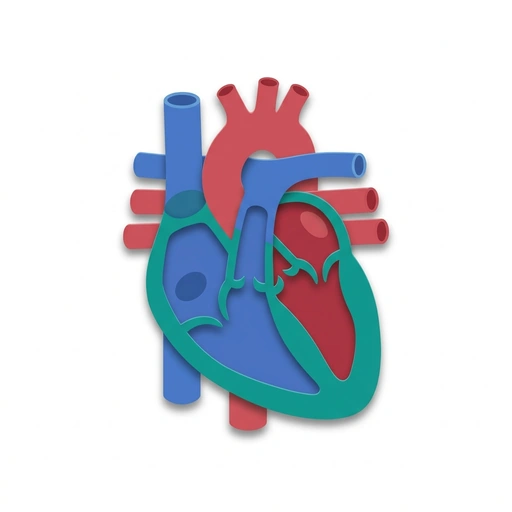
Anatomy and Physiology for Patient Care
Understand how the human body functions as an interconnected system. Learn the core physiological concepts and organ systems that underpin vital signs, fluid balance, and clinical nursing assessments.
Anatomy and Physiology for Nursing
Build a working understanding of the human body and how its organ systems cooperate to keep us alive. Tailored for nursing entrance exams like the TEAS and HESI, this course covers high-yield anatomy, physiological feedback loops, and cellular mechanisms.
Start How the Human Body Works today.
Download Tomo, search How the Human Body Works, and play your first lesson in under a minute.