
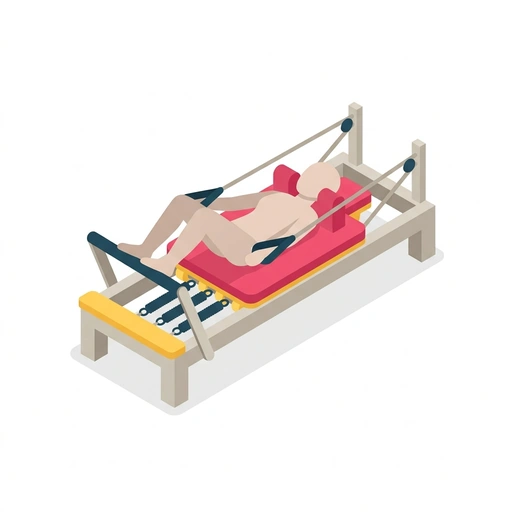
Reformer Pilates Mechanics
Bridge the gap between hearing instructor cues and feeling the precise biomechanical shifts in your body. Master reformer spring physics, pelvic alignment, and dynamic core control to elevate your studio practice.
Like Duolingo, but for Reformer Pilates Mechanics. Tomo turns the whole topic into a game you play five minutes a day, until it actually sticks.
21 levels across 3 sections, about 42 minutes end to end, roughly 8 days at five minutes a day. It moves through Decoding Form and Studio Cues, Working with the Machine, and Full-Body Integration on the Carriage. It assumes you already know the basics.
Free forever · No credit card · iPhone & Android
Key ideas in Reformer Pilates Mechanics
- Knitting the ribs uses internal and external obliques to draw the anterior rib cage inward and down
- The cue aims to prevent spinal hyperextension without collapsing or hollowing the upper sternum
- Collapsing the chest restricts diaphragmatic breathing and rounds the thoracic spine excessively
- A heavy tailbone anchors the sacrum against the carriage to resist posterior pelvic tilt
- Extending the legs under spring load naturally tempts the lumbar spine to flatten or imprint
- Anchoring the sacrum preserves the natural lumbar curve during dynamic leg movements
- Sliding shoulders down recruits lower traps and serratus without pinching the rhomboids
- Zipping up initiates an upward pelvic floor contraction that co-activates deep abdominals
- Reaching through the crown engages spinal stabilizers to lengthen vertebrae against resistance
- Zipping up begins with an upward pelvic floor lift, not an aggressive stomach vacuum
- Transverse abdominis fires synergistically with the pelvic floor to create horizontal tension
- Reaching through the crown activates deep neck flexors and spinal rotators for axial length
- Axial elongation distributes compressive spring load evenly across intervertebral discs
- Tilting the chin up or jamming the head back compresses the cervical spine under load
- Closed-chain footwork transmits heavy spring recoil directly through the pelvis and spine
- Neutral pelvis maintains the natural lumbar curve to disperse axial load like a spring
You've tried the other tabs
Thirty open tabs. Four facts you actually kept.
You watched. You nodded. By Sunday it was gone.
One answer, then back to scrolling.
Eight weeks. You meant to finish. You didn't.
Tomo gives Reformer Pilates Mechanics the Duolingo treatment: levels, streaks, and quick quizzes that test what you just learned. That game loop is what the tabs above never had, so it's the one you actually finish.
Here's what playing it feels like
A real question from this course. Take your best guess.
When your instructor tells you to 'knit your ribs,' which muscles are you mainly using?
Get it right to open this lesson and 20 more in the app.
How to learn Reformer Pilates Mechanics, step by step
Go in order. 21 short levels across 3 sections, about 42 minutes in all, five minutes a day.
- 1
Decoding Form and Studio Cues
- Decoding Classic Studio Cues
- Pelvic Alignment and Breathing Under Load
- Foot Positions and Lower-Body Tracking
- 2
Working with the Machine
- Spring Dynamics and Carriage Control
- Scapular Stability and Strap Mechanics
- 3
Full-Body Integration on the Carriage
- Spinal Articulation and Hip Dissociation
- Dynamic Reformer Flow and Progression
3 sections · 7 units · 21 levels. Built to play, not to enroll.
Questions about Reformer Pilates Mechanics
How do I learn Reformer Pilates Mechanics?
Go in order: start with Decoding Form and Studio Cues, then Working with the Machine, then Full-Body Integration on the Carriage. On Tomo that's 21 short levels, about 42 minutes in all, played five minutes a day. Start free and play the first level in under a minute.
Is there a Duolingo-style app for Reformer Pilates Mechanics?
Yes. Tomo works like Duolingo: short daily lessons, streaks and quick quizzes. Reformer Pilates Mechanics is one of its free courses, and you can type any other topic to get a course of your own.
Is the Reformer Pilates Mechanics course free?
Yes. Reformer Pilates Mechanics is playable on Tomo's free plan, which doesn't expire. No credit card, no waitlist. Download the app and start your first lesson.
How long does it take to learn Reformer Pilates Mechanics?
21 levels across 3 sections, about 42 minutes of play in total. It's built for five minutes a day, so you finish it a little at a time instead of all at once.
Do I need any background to start Reformer Pilates Mechanics?
No. It's pitched at an intermediate level, so it starts where you are and builds up. If you can tap a phone, you can start.
Tomo is in ChatGPT
Tomo is also a ChatGPT plugin: the same playable courses, built and played inside your chat.
Add Tomo to ChatGPT- What to ask
- “Make me a Tomo course on black holes.” “Turn this chat into a Tomo course.”
- What you get
- Quick questions with instant feedback, hearts and stars, ready to play in about a minute.
- Where it goes
- No sign-up to start. Connect your Tomo account and your streak carries on in the app.
You pick the voice
Reformer Pilates Mechanics is taught in the Bestie style: your friend who just gets it. Want a different feel? In the app you can spin up the same topic in any of Tomo's teaching styles. Same facts, totally different vibe.
More Health on Tomo
Anatomy for Pilates Professionals
Bridge the gap between textbook anatomy and the moving body. Master the musculoskeletal relationships that drive core stability, spinal articulation, and efficient movement patterns in your clients.
Pilates Anatomy: The Body in Motion
Understand how your muscles and bones work together to create the strength and control that defines Pilates. Learn to move from your center and protect your spine with every breath.
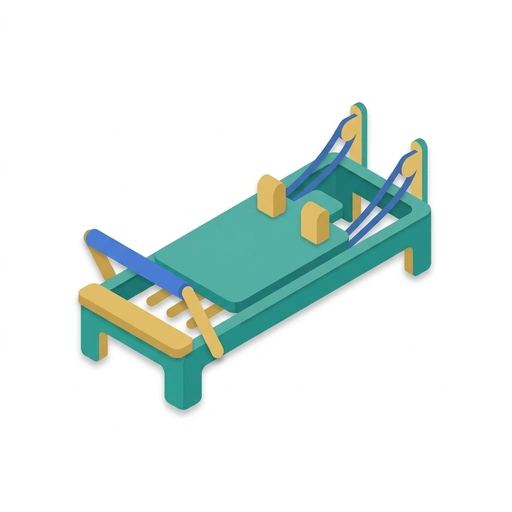
Reformer Pilates: Movement and Machine
Learn how the Pilates reformer works with your body to build core strength, length, and balance. Decode common studio cues, master machine mechanics, and execute signature exercises with control.
Anatomy for Pilates Movement
Bridge the gap between textbook anatomy and movement instruction. Understand joint mechanics, muscular lines of pull, and functional compensations across the classic and contemporary Pilates repertoire.
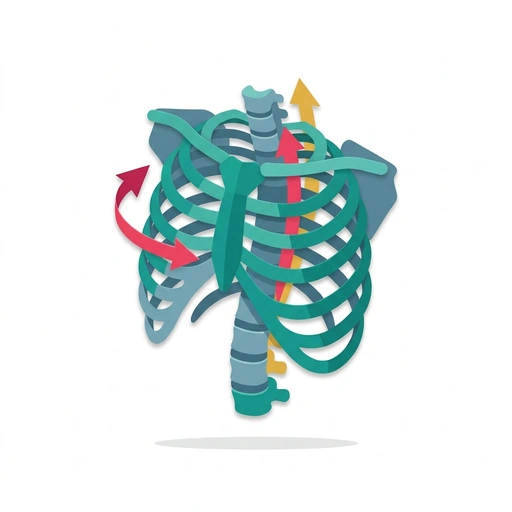
Pilates Anatomy in Motion
Look past generic cues and uncover the biomechanics behind every roll, reach, and teaser. Learn how deep stabilizers, myofascial slings, and joint mechanics work together to build effortless, injury-free movement.
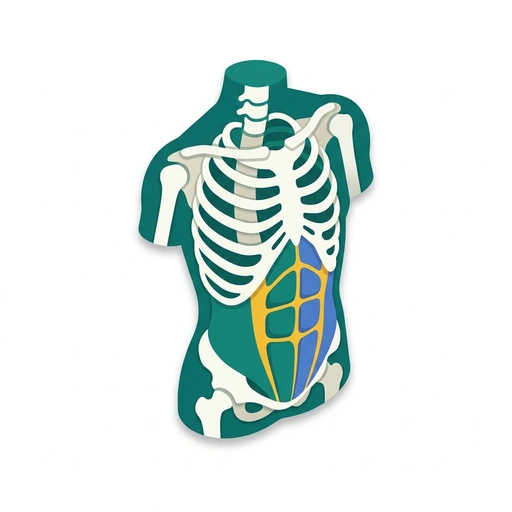
Anatomy for Pilates
Understand the muscles, joints, and mechanics behind every Pilates movement. Learn how your core, spine, and breath work together to build balanced strength and prevent strain.
Start Reformer Pilates Mechanics today.
Download Tomo, search Reformer Pilates Mechanics, and play your first lesson in under a minute.